What Is the Anion Gap?
The anion gap is a computed value used to evaluate acid-base balance and detect hidden irregularities in serum electrolytes. It is derived from common blood chemistry values and helps clinicians recognize an electrolyte imbalance that may not be obvious from a general review of the electrolytes alone. In practice, the anion gap is often used as a diagnostic tool in the workup of metabolic acidosis and other metabolic disturbance patterns.
The calculation primarily uses serum sodium, serum chloride, and serum bicarbonate, with potassium sometimes included depending on the method or laboratory reference range used. Because the body contains charged particles, or ions, the difference between measured cations and measured anions can reveal an anion deficit or anion excess. That difference can reflect unmeasured acids, toxins, or protein changes such as albumin abnormalities.
Clinically, the anion gap is part of a broader clinical assessment and should be interpreted alongside symptoms, laboratory values, renal function, and the overall metabolic evaluation. The anion gap is not a diagnosis by itself, but anion gap clinical significance it can direct attention to important causes of acid-base disturbance.
How the Anion Gap Calculator Works
An anion gap calculator streamlines the calculation by using the measured values from a serum chemistry panel or electrolyte panel. The most common formula is:
Anion gap = serum sodium - (serum chloride + serum bicarbonate)
Some versions also include potassium, especially in older reference methods:
Anion gap = (serum sodium + potassium) - (serum chloride + serum bicarbonate)
The reason potassium is sometimes excluded is that it is relatively small compared with sodium, so including it usually modifies the result only slightly. Still, when you are using an anion gap calculator, it is important to know which formula is being applied so the result matches the expected reference interval.
The calculator works best when the input values are accurate and come from the same blood draw. That matters because serum electrolytes can vary over time, especially during acute illness. The calculated result helps identify whether the patient has a normal or elevated gap and whether further workup is needed for an underlying metabolic disturbance.
Common inputs include:
- Serum sodium Serum chloride Serum bicarbonate Potassium, according to the method Albumin, if a corrected interpretation is needed
A quality calculator can also support interpretation by reminding the user that a change in albumin may alter the apparent anion gap, making albumin correction a key part of assessment in some cases.
Understanding Delta Anion Gap
The delta anion gap is a tool used to compare the degree of extra unmeasured anions with the decline in bicarbonate. This can reveal a mixed acid-base disorder that could be overlooked if you only review the standard anion gap. The related concepts of delta ratio and delta-delta are used to interpret whether the change in gap is corresponding to the change in bicarbonate.
This approach is especially useful in metabolic acidosis. If the gap rises because of extra acids, bicarbonate should fall in a predictable way. If the relationship is not what you anticipate, it may indicate another process is occurring too, such as a concurrent normal anion gap metabolic acidosis or metabolic alkalosis.
The delta ratio is commonly calculated as:
Delta ratio = (measured anion gap - normal anion gap) / (normal bicarbonate - measured bicarbonate)
The delta-delta concept is comparable and often used interchangeably in clinical teaching. It contrasts the rise in anion gap to the fall in bicarbonate to evaluate whether the apparent acid-base change fits the expected pattern. This can be a useful way to identify a hidden second process affecting acid-base balance.
In simple terms, delta analysis asks: if there is an anion excess causing the gap to rise, did bicarbonate fall by the expected amount? If not, the patient may have a mixed disorder. That is important because a normal-looking pH or a partially corrected bicarbonate can obscure a more serious problem.
Stepwise Computational Illustration
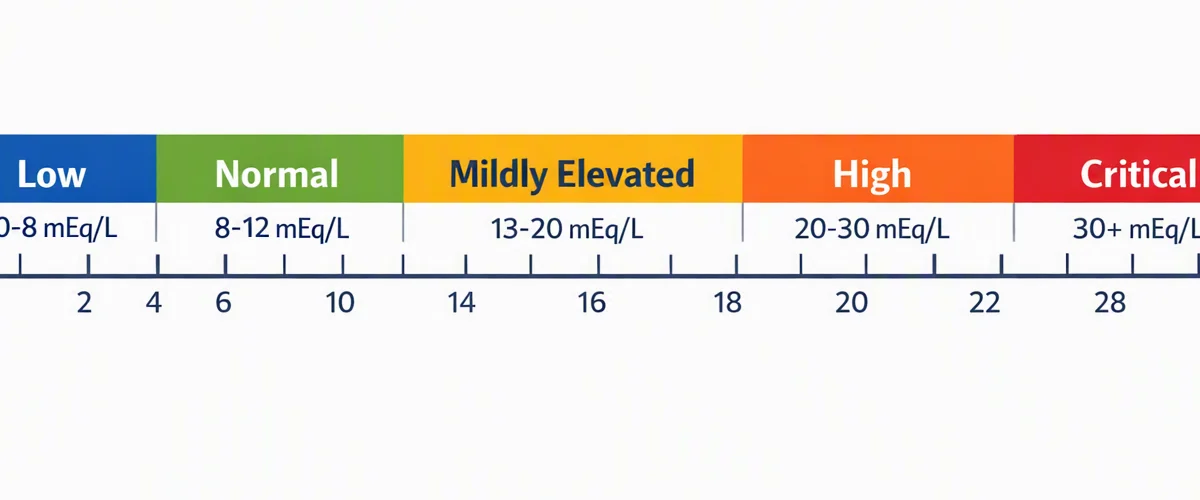
To learn how the anion gap calculator and delta analysis combine, it helps to go through a real-world example. Imagine the laboratory reference range for anion gap at a given institution is 8 to 12 mEq/L, and the standard formula uses sodium, chloride, and bicarbonate.
Sample laboratory values:
- Serum sodium: 140 mEq/L Serum chloride: 100 mEq/L Serum bicarbonate: 16 mEq/L Albumin: reduced
With the formula:
Anion gap = 140 - (100 + 16) = 24 mEq/L
This is an elevated anion gap, since it is above the expected range. If the patient’s baseline or expected normal anion gap is 10 mEq/L, the delta calculation would be:
Delta AG = 24 - 10 = 14
After that, compare the fall in bicarbonate from a standard normal value of 24 mEq/L:
Delta bicarbonate = 24 - 16 = 8
Now calculate the delta ratio:
Delta ratio = 14 / 8 = 1.75
The outcome may suggest a predominantly elevated-gap process, though exact interpretation depends on the clinical context. If anion gap meaning the ratio were much lower or much higher, that would point toward a mixed acid-base disorder.
It is also important to account for albumin correction. Low albumin can lower the measured anion gap, making a true high anion gap metabolic acidosis look less obvious. Correcting for albumin can reveal a more accurate estimate of the patient’s acid-base state and help prevent missed diagnosis.
How to Interpret Delta Gap Results
Delta analysis is valuable because it links the anion gap with predicted bicarbonate changes. In a pure high anion gap metabolic acidosis, the elevation in anion gap should typically correspond to a similar decrease in bicarbonate. If that relationship is discrepant, the patient may have an additional disorder.
Common reading patterns include:
- Delta ratio roughly between 1 and 2: frequently consistent with a primary high-gap acidosis Delta ratio less than 1: may point to a concurrent normal anion gap metabolic acidosis Delta ratio greater than 2: may point to a concurrent metabolic alkalosis or chronic respiratory disorder with compensation
These patterns are not absolute diagnoses, but they are a practical framework for acid-base interpretation. The patient’s symptoms, vital signs, renal function, and other laboratory tests remain essential.
Respiratory compensation also plays a role. When metabolic acidosis develops, ventilation often increases to lower carbon dioxide. If the respiratory response is not suitable, a respiratory disorder may also be present. A careful interpretation should assess whether the patient’s breathing pattern fits the expected compensation for the degree of acidosis.
In clinical practice, delta gap results can reveal hidden complexity. For example, a patient may have lactic acidosis causing a high-gap acidosis and also diarrhea causing a normal-gap acidosis. Without delta analysis, the complete picture of the acid-base problem may be missed.
Typical Causes of Irregular Anion Gap
Atypical anion gap findings commonly suggest a pathologic acid load or loss of bicarbonate. The causes differ depending on whether the gap is elevated or unchanged.
Typical causes of high anion gap metabolic acidosis include:
- Lactic acidosis Ketoacidosis Renal failure Toxic alcohols
Lactic acidosis happens when lactate rises due to hypoperfusion, sepsis, shock, seizures, or other causes of tissue oxygen imbalance. It is a major cause of anion excess and can lead to severe metabolic derangement.
Ketoacidosis may be seen in diabetic ketoacidosis, alcoholic ketoacidosis, or starvation states. In these settings, ketone bodies raise the anion gap while bicarbonate falls as buffering capacity is used up.
Renal failure can reduce acid excretion and lead to retention of acids that increase the anion gap. In advanced kidney dysfunction, the ability to maintain normal acid-base balance is impaired, making serial monitoring valuable.
Toxic alcohols such as methanol, ethylene glycol, and related compounds can create a dangerous acid load. These ingestions may manifest with an elevated anion gap and require urgent recognition, especially when the clinical history is unclear.
On the other hand, normal anion gap metabolic acidosis often results from bicarbonate loss or impaired acid secretion. Causes include gastrointestinal bicarbonate loss, certain renal tubular disorders, or medication effects. Delta analysis helps reveal when both elevated-gap and normal-gap processes are present at the same time.
Constraints and Medical Considerations
Although an anion gap calculator is a valuable diagnostic tool, it has notable limitations. The initial concern is albumin correction. Because albumin is a primary unmeasured anion, low albumin can lower the observed gap and conceal clinically important abnormalities. A corrected value may more closely reflect the true state of acid-base balance.
Laboratory error is a further concern. Small measurement inaccuracies in sodium, chloride, or bicarbonate can affect the calculated result. For that reason, the anion gap should always be evaluated in light of the full clinical assessment and repeated if the result does not fit the clinical picture.
Different laboratories may use different methods, instruments, and laboratory reference range values. A normal result in one setting might be considered borderline in another. This is why the local reference interval matters when using the calculator for screening.
Other important considerations include:
- Variations in serum electrolytes over time can alter interpretation Chronic disease may dampen the expected response to an acid load Coexisting disorders can obscure the primary process Clinical context should always guide the final interpretation
Overall, the anion gap and delta analysis should assist, not replace, clinical judgment. They are especially useful when combined with history, exam findings, blood gas data, kidney function, and other laboratory results.
Common Questions
What is the anion gap formula?
The standard anion gap formula is serum sodium minus the sum of serum chloride and serum bicarbonate. In some methods, potassium is added, depending on the method used by the laboratory. The exact formula should match the local blood chemistry reporting system so the result is interpreted correctly.
How do you calculate delta anion gap?
To calculate delta anion gap, subtract the normal expected anion gap from the measured anion gap. Then contrast that rise to the drop in bicarbonate from the normal expected value. This comparison is the basis of the delta gap formula and helps identify a mixed acid-base disorder.
What does a high delta ratio mean?
A high delta ratio can suggest that the rise in anion gap is greater than the fall in bicarbonate would predict. That may indicate a concurrent metabolic alkalosis or chronic respiratory compensation pattern. The exact meaning depends on the full acid-base interpretation and the patient’s clinical status.
Why does albumin correction matter in anion gap interpretation?
Albumin correction is important because albumin is a major unmeasured anion. When albumin is low, the measured anion gap may appear falsely normal or only mildly elevated. Correcting for albumin improves the accuracy of anion gap analysis and can uncover a hidden high anion gap metabolic acidosis.
Can a normal anion gap still occur with a mixed acid-base disorder?
Yes. A normal anion gap does not rule out a mixed acid-base disorder. A patient can have a normal anion gap metabolic acidosis along with another process that offsets the gap, or a high-gap disorder that is partially masked by low albumin or another concurrent condition. That is why delta analysis, clinical context, and full blood chemistry review are so important.