What exactly are these unmeasured cations
Unmeasured cations remain positively charged ions in the blood that are present but not routinely counted on a standard serum chemistry panel. They are important because the body maintains electrical neutrality: the total positive charge from cations must balance the total negative charge from anions. When clinicians review serum electrolytes, they usually see the major measured ions, but some ions are left out of the routine calculation.
The most familiar measured ions include sodium, chloride, and bicarbonate. These are the core values used to estimate the anion gap. The gap is a useful derived number in acid-base assessment because it provides a rapid view at ion balance and can suggest whether hidden acids or other factors are involved.
In everyday practice, measured ions do the majority of the work in lab interpretation. Still, the smaller set of unmeasured cations can influence the result, especially when there is a major shift in serum concentration or when a patient has an unusual exposure or illness. That is why understanding these ions is useful for both laboratory interpretation and broader acid-base balance review.
A basic metabolic panel gives the main electrolyte values, but it does not fully represent all charged species in plasma. The gap reflects what is not directly measured, including some anions and cations. Most of the time, the body’s buffer systems and ion distribution keep the effect small. However, in the right clinical setting, these missing cations become an important diagnostic clue.
Which Frequent Positive ions Are Not Measured Routinely?
The most discussed common cations that are not measured routinely are magnesium, calcium, potassium, and lithium. Each has a distinct function in physiology, and each affects blood chemistry in another way.
Potassium is frequently tested in typical laboratory assessment, but it is not part of the traditional anion gap formula. Since its serum level is usually much lower than sodium, its omission seldom changes the calculation greatly. Nevertheless, markedly elevated or extremely low potassium can play a role in broader electrolyte disturbances and may influence the overall clinical picture.
Calcium is another positively charged ion that is typically evaluated on its own rather than included in the anion gap equation. Shifts in calcium can impact neuromuscular function and suggest systemic illness, but its direct effect on the gap is generally limited unless the abnormality is severe.
Elevated magnesium often represents a concern in admitted patients, especially those with low intake, gastrointestinal losses, or kidney problems. Hypermagnesemia can act as an extra cation burden, but important changes in the anion gap are uncommon unless the elevation is severe.
Lithium remains one of the most important unmeasured positive ion from a clinical laboratory reading standpoint because it can greatly change the anion gap when presented in poisonous amounts. In contrast to the others, lithium is a medication and potential toxin rather than a common electrolyte. Its positive electrical charge can directly shift ion balance and cause a low or even subzero anion gap.
These positively charged ions are generally limited factors under usual circumstances, but they grow important when the reference range is surpassed or when there is an unexpected acid-base pattern. This is why the question is not only which cations are absent, but which ones are clinically significant.
In What Way Uncounted Positive Ions Influence the Anion Gap
The anion gap is a calculated assessment of the disparity between typically measured positive and negative ions. As unmeasured cations increase, the equilibrium can shift in a way that makes the gap seem lower. That is because extra positive charge reduces the space left for unmeasured anions in the equation.
This link becomes especially important in acid-base balance. As an example, in metabolic acidosis, a high anion gap often suggests the accumulation of acids. However if the patient also has a significant cation load or low albumin, the result can be misleading unless the full picture is reviewed.
Albumin deserves close attention because it is a major negatively charged plasma protein. Low albumin reduces the expected anion gap, which can mask an underlying acid-base problem. In other words, a normal gap is not always reassuring if albumin is low. At this point a corrected anion gap becomes useful in laboratory interpretation.
Unmeasured cations matter because they can obscure what is happening with hidden acids, buffer systems, and plasma proteins. They do not usually create major issues in healthy individuals, but they can alter the numerical result enough to change clinical thinking. This is why the gap should be interpreted as part of a full acid-base assessment, not as a standalone answer.
In practical terms, if the anion gap clinical significance gap is unexpectedly low, clinicians may think about extra cation load, low albumin, or both. If the gap is high, the focus shifts toward acid accumulation, though unusual cation shifts can still complicate interpretation. The core idea is simple: ion balance is dynamic, and the anion gap is only one window into that balance.
When to Consider an Higher Unmeasured Cation Load
An elevated unmeasured cation load is most worth considering when the test pattern does not match the patient’s clinical picture. The concern increases if there is toxic exposure, impaired kidney function, or a clear electrolyte imbalance that is not fully described by the usual measured ions.
Kidney disease is a frequent setting because impaired renal function can interfere with excretion of multiple electrolytes and cause renal insufficiency-related shifts in serum concentration. In this context, both cation and anion handling may vary. The result can be a confusing pattern that needs careful review rather than a quick conclusion.
Poisoning is another important clue. Lithium exposure can produce a low anion gap and should be considered when there is a compatible medication history or altered mental status. This is an example of how a specific cation can serve as a useful diagnostic clue, especially if the lab pattern appears at odds with the clinical picture.
A significant acid-base imbalance can also point to a hidden ion problem. If a patient has symptoms of systemic illness, unexpected lab changes, or worsening acid-base disturbance, the possibility of unmeasured cation contribution should be kept in mind. These situations often require careful review of the full metabolic panel and repeat testing if needed.
Other signs that deserve attention include recent confusion, weakness, arrhythmia concerns, or a sudden change in a previously stable electrolyte profile. In those cases, the issue is not just the number on the page. It is the possibility that the reported result reflects a broader disturbance in ion balance or a developing toxic or renal process.
Frequent Causes of Low-Range or Normal Anion Gap
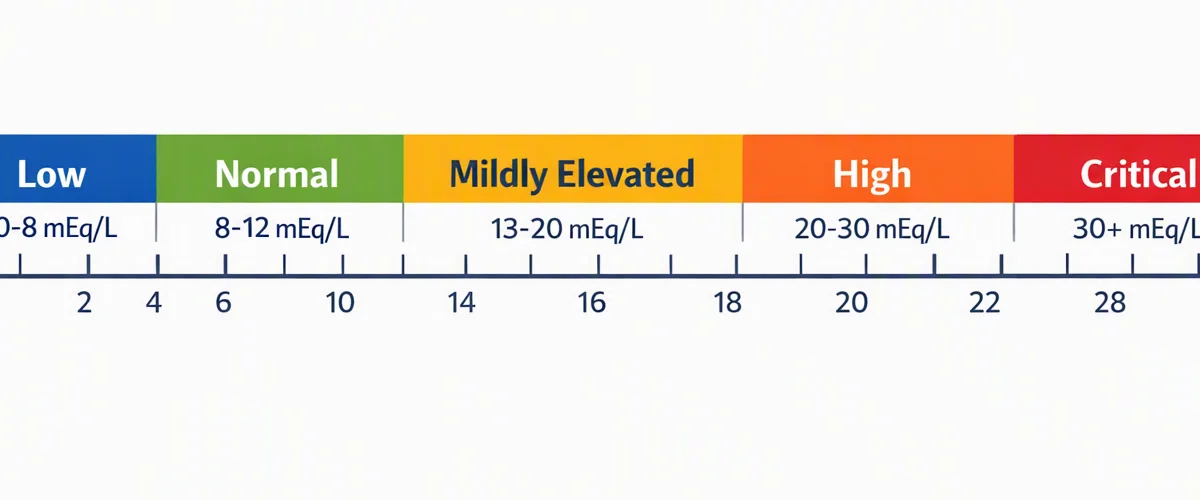
A low or normal anion gap does not always mean the patient is well. Among the most frequent causes is hypoalbuminemia. Since albumin is a primary negatively charged protein, low levels lower the calculated gap and can conceal another process. This is why albumin should always be considered when evaluating the result.
Lab error is another common cause. A specimen problem, analytic issue, or data entry problem can distort the measured ions and create an apparently abnormal gap. If the number does not fit the patient’s condition, redoing the test is often the initial step in responsible laboratory interpretation.
Paraproteinemia is an important but less common cause. Abnormal plasma proteins, especially in monoclonal gammopathies, can alter charge distribution and affect the apparent balance between measured ions. Because these proteins are part of the broader pool of plasma proteins, they can influence the gap in a way that points to an underlying blood-related disorder.
A typical anion gap can also be seen when there is no major acid-base problem, when the cation and anion shifts cancel each other out, or when the abnormality is mild enough to fall within the reference range. That is why the result must be interpreted with clinical signs, medication history, kidney function, and albumin level in mind.
In short, a low or normal gap is often explained by one of three broad ideas: low albumin, lab error, or abnormal proteins. A patient-focused interpretation helps separate benign variation from medically significant disease.
How to Interpret Results with an Anion Gap Calculator
An anion gap calculator is a useful tool for fast assessment of electrolyte data. It usually uses sodium, chloride, and bicarbonate to estimate the gap. Because these values come from the standard chemistry panel, the calculator provides a quick snapshot of the current ion balance.
To use it well, first confirm that the input values are accurate and belong to the same sample. Small transcription errors can make the result unreliable. Next, compare the output to the expected reference range used by the laboratory or institution. Different methods and analyzers may produce slightly different results, so the exact cutoff matters.
If the result is low, think through common explanations: hypoalbuminemia, lab error, excess cation load, or paraproteinemia. If the result is high, consider whether the patient has metabolic acidosis or another process that increases unmeasured anions. The number alone is not the diagnosis; it is a starting point for acid-base assessment.
It also helps to review the relationship of chloride and bicarbonate. A low bicarbonate often points toward metabolic acidosis, while chloride changes may indicate compensation or a non-gap pattern. Pairing the result with albumin allows a more accurate corrected anion gap, especially in patients with systemic illness.
Use the calculator as part of a broader clinical reasoning process. Ask whether the result fits the symptoms, medication list, kidney function, and other measured ions. That approach makes the calculator more than a number generator; it becomes a tool for better laboratory interpretation.
A useful anion gap result is not just about calculation. It is about matching the number with the patient’s condition, the serum electrolytes, and the likely acid-base disorder.
In practical terms, if the gap is unexpected, review the underlying values first, then assess whether albumin correction is needed, then consider uncommon Check out this site cations or toxic exposures. This sequence helps avoid missing a hidden diagnosis.
FAQ
Which are the most common unmeasured cations?
The most frequently mentioned unmeasured cations are magnesium, calcium, potassium, and lithium. Potassium and calcium are commonly measured separately, but they are not part of the classic anion gap formula. Lithium is the most clinically important unusual cation because it can significantly affect the anion gap when present in toxic amounts.
Why do unmeasured cations matter in an anion gap calculation?
They matter because the anion gap is based on measured ions only, mainly sodium, chloride, and bicarbonate. Extra positive charge from unmeasured cations can lower the apparent gap and change laboratory interpretation. This can influence acid-base assessment, especially when there is hypoalbuminemia, kidney disease, or a possible toxic exposure.
Is lithium able to cause a low or negative anion gap?
Yes. Lithium is a classic cause of a low or even negative anion gap when serum levels are high enough. Because it is a positively charged ion that is not routinely included in the calculation, it can significantly shift ion balance. If the result is unexpected and lithium exposure is possible, toxicity should be considered promptly.
Can calcium or magnesium substantially alter the anion gap?
Usually not by much. Calcium and magnesium can act as unmeasured cations, but they typically do not alter the anion gap dramatically unless the abnormality is severe. Their clinical importance is greater for electrolyte disturbances and overall acid-base balance than for routine gap calculation.
What do you do if the anion gap result seems unexpected?
First, confirm the electrolyte values and consider repeating the test if lab error is possible. Then check albumin, review chloride and bicarbonate, and think about kidney disease, paraproteinemia, or toxicity. If the clinical picture suggests an acid-base disorder or a major electrolyte imbalance, further evaluation is warranted rather than relying on the number alone.